
Where to Spot Otters on Quiet British Rivers
Every slot player has heard the phrase "this machine is due." It is one of the most persistent myths in iGaming, and it costs people money every single day. The truth is that a slot machine has no memory. It does not know you have been losing for an hour, and it does not owe you a jackpot because the person before you walked away. What actually determines your long-term results is something far less dramatic but far more useful to understand: the math baked into the game before you ever press spin.
If you want to play slots with your eyes open — and get more entertainment for your bankroll — you need a working grasp of return to player, house edge, and volatility. Let us break those down without the jargon.
RTP: What the Number Actually Means
Return to player, or RTP, is the percentage of all money wagered on a game that is paid back to players over time. A slot with 96% RTP returns 96 cents for every dollar wagered — in theory, across millions of spins. The remaining 4% is the house edge. For a closer look, สล็อต has helpful details.
Here is the part most players miss: RTP is a theoretical average, not a promise. You can sit at a 96% game and lose 20 spins in a row. You can also hit a 500x multiplier on your third spin. The percentage only becomes visible when you zoom out to tens of thousands of spins. Individual sessions are pure variance.
Where RTP gets genuinely useful is comparison. A 96% slot and a 94% slot look almost identical on screen, but that 2% gap doubles the house edge — from 4% to 6%. Over a long session, that difference quietly eats into how long your money lasts. Choosing higher-RTP games is one of the few decisions fully within your control.
A Quick Reference on Typical RTP Ranges
- Online slots: usually 94% to 97%, with some providers like Push Gaming and Nolimit City often landing above 96%
- Land-based slots: frequently 85% to 92%, which is why the same game can feel stingier in a casino
- Blackjack (basic strategy): around 99.5%
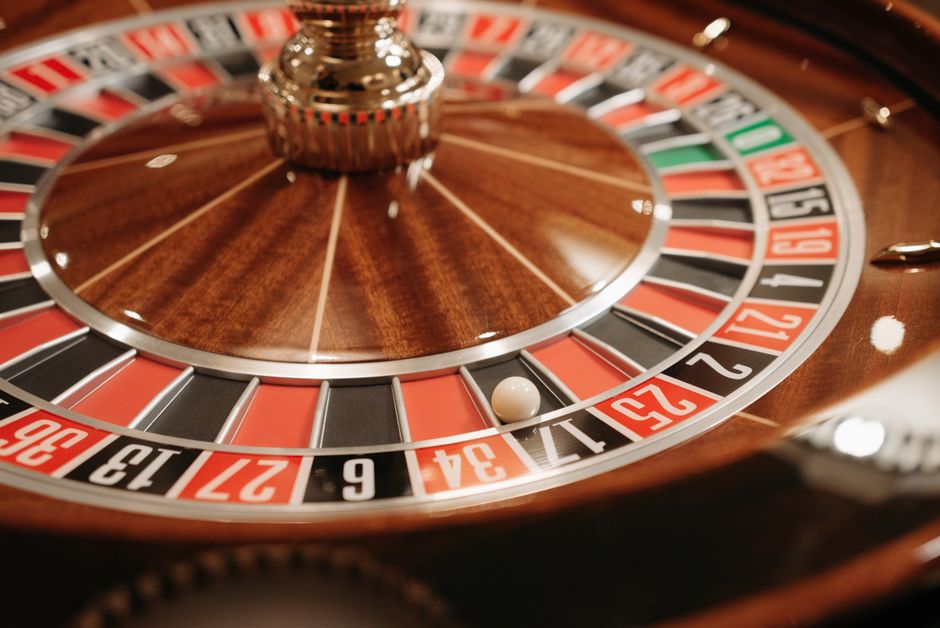
- Roulette (single zero): about 97.3%
- Roulette (double zero): roughly 94.7%
- Video poker (Jacks or Better, perfect play): close to 99.5%
Notice the pattern: games with an element of skill tend to have far better odds than pure chance games. That is not a coincidence.
Volatility: The Part RTP Does Not Tell You
Two slots can both sit at 96% RTP and feel completely different. That is volatility — sometimes called variance. It describes how the payouts are distributed.
Low-volatility slots pay small amounts frequently. Think classic three-reel games where you win a few coins every five or six spins. Your bankroll lasts longer, but big wins are rare and modest.
High-volatility slots do the opposite. You might spin 200 times with almost nothing, then hit a 1,000x bonus. Games like Money Train or San Quentin fall into this category. They are thrilling, but they demand a bigger bankroll and a stronger stomach.
Here is a practical tip: match volatility to your session budget. If you are playing with €20, a high-volatility slot with a €1 spin gives you very little room to survive a cold streak. A low or medium volatility game at €0.20 per spin gives you hundreds of chances to hit something.
Why "Due" Machines Do Not Exist
Modern slots use random number generators, or RNGs, that produce a new outcome every few milliseconds. Each spin is independent. The odds on your next spin are exactly the same regardless of whether you just won or lost ten in a row.
The illusion of being "due" comes from a well-documented psychological bias called the gambler's fallacy. If a fair coin lands heads eight times, the next flip is still 50/50. Slots work the same way, only the probability is far more lopsided against you on any single spin.
Progressive jackpots are a partial exception in one narrow sense: the jackpot grows as more people play, so the theoretical value of a spin does increase slightly as the pool climbs. But that edge rarely overcomes the base house edge unless the jackpot becomes enormous. It is still not a strategy to rely on.
The Games Where Skill Actually Shifts the Odds
Slots are pure chance. Poker is not. That distinction is why serious players often split their time between the two.
In poker, particularly Texas Hold'em, you are not playing against the house — you are playing against other people, and the casino takes a rake. Over time, a skilled player can genuinely win money from weaker opponents. That is a fundamentally different proposition from a slot machine, where the math is fixed against you from the first spin.
Similarly, blackjack with basic strategy reduces the house edge to around 0.5%. Perfect card counting can push a player into a theoretical advantage, though casinos actively watch for it and can bar players as a result.
The takeaway: if you want a chance at an edge, the tables and the poker room are where it lives. Slots are entertainment with a predictable cost.
Managing a Bankroll Like a Grown-Up
The single most impactful thing any player can do has nothing to do with picking machines. It is setting a loss limit before sitting down and treating that limit as uncrossable.
- Decide your session budget in advance. If losing €100 would ruin your week, do not bring €100.
- Adjust your spin size to your bankroll. A common guideline is 1–2% of your bankroll per spin on high-volatility games, up to 5% on lower ones.
- Track your net result. Most platforms show session profit and loss. Look at it honestly.
- Walk away when the limit hits. Chasing losses is how small entertainment budgets become real problems.
The house edge is not a flaw in the system. It is the system. Casinos, sportsbooks, and slot providers stay in business because of it, and they are entitled to. Your job is not to beat it — it is to understand it and keep your play within the bounds of what you can afford to lose comfortably.
Final Thoughts
iGaming is a massive, colorful, genuinely entertaining industry, and there is nothing wrong with enjoying it. But the players who get the most out of it are the ones who treat the math as information rather than as an obstacle to ignore. Know the RTP before you spin. Match volatility to your budget. Understand that slot machines do not remember you. And keep the poker room in mind if you want a game where your decisions actually matter. The randomness is the fun part — once you stop expecting it to work in your favor, it becomes a lot easier to enjoy on your own terms.
LEAVE A COMMENT